
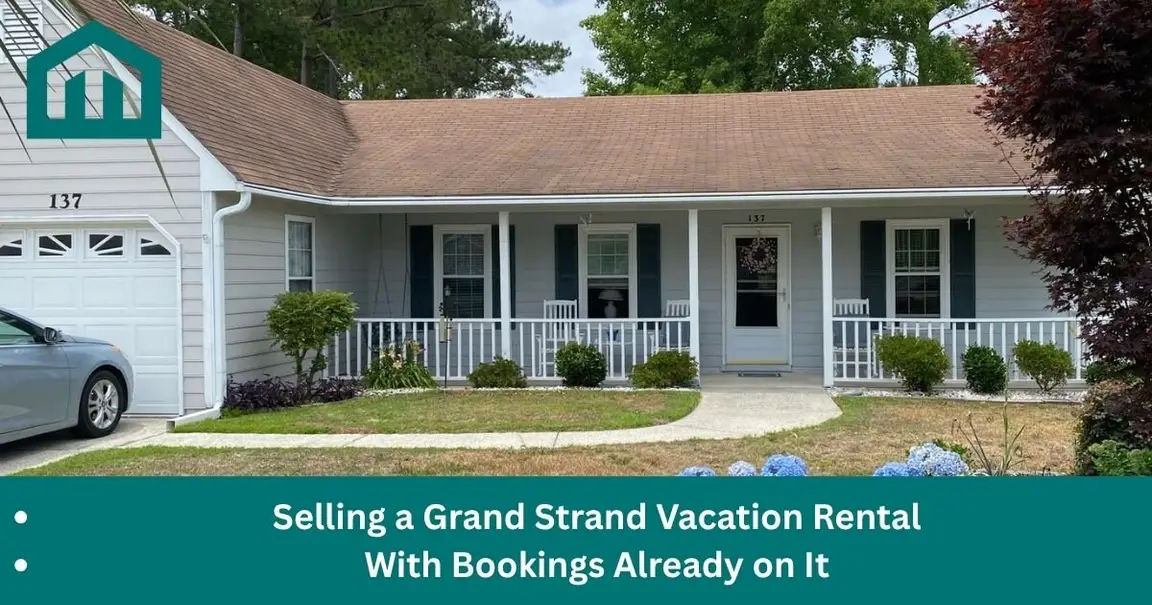
You can sell with bookings on the calendar, and South Carolina doesn’t leave the outcome to negotiation. A statute decides it. Reservations starting within 90 days of the deed being recorded have to be honored. Ones starting after that don’t, but the guests get their money back on a deadline.
Which means the single biggest lever you control isn’t price. It’s your closing date.
I’m Adam Seguin. My business partner Jeremy Resmer and I run Myrtle Beach Home Buyers, and together we’ve bought more than 400 properties across Horry and Georgetown Counties. Here’s how the law actually works and how to use the calendar to your advantage.
South Carolina wrote a statute for exactly this
The South Carolina Vacation Rental Act, S.C. Code § 27-50-210 et seq., governs rentals of less than 90 days used for vacation or leisure. It sits in the same chapter as the property disclosure law, and § 27-50-250 handles what happens when a rented property changes hands.
Notice that the Act draws its line at the same 90 days Myrtle Beach uses in its zoning code. That’s not a coincidence — it’s the state’s general dividing line between vacation rental and tenancy.
The Act also requires written vacation rental agreements, and guest funds held through a licensed broker or manager go into a trust account. Prorating accommodations and hospitality taxes at closing is separate housekeeping, handled through the S.C. Department of Revenue.
Most sellers have never heard of any of this. Most buyers haven’t either. It still controls the transaction.
The 90-day rule, and what happens to everything after
Under § 27-50-250, the new owner takes title subject to the vacation rental agreement and the rental management agreement for every rental period beginning no later than 90 days after the deed is recorded.
So a guest booked for a week that starts inside that window keeps their week. The buyer can’t cancel them, and neither can you.
For reservations beginning after the 90-day window, neither you nor the buyer is obligated to honor them. But those guests are owed a refund of what they’ve paid, and the refund is due within 45 days of the deed being recorded. If the buyer doesn’t want those bookings, they should direct the management company to notify the guests and process the refunds.
Two practical notes. The management company can often move displaced reservations into other units it manages — it isn’t required to, but many will try. And the Act doesn’t require anyone to tell the guest the property was sold, which is a good reason to make sure someone does.
Two deadlines you have to hit as the seller
The Act puts real obligations on you, and they’re easy to miss.
Before contract ratification, you must disclose in writing that the property is subject to a rental management agreement, and disclose all existing rental reservations. This belongs in the rental section of your Residential Property Condition Disclosure.
Within 14 days after contract ratification, you must give the rental management company the purchaser’s name and address, in writing.
Handle both. There aren’t strict penalties written into the Act itself, but a nondisclosure claim under the disclosure statute is a separate and more expensive problem.
Not sure what your management agreement requires? Call (843) 507-5058 and we’ll read it with you.
When the Act doesn’t apply to you
This is where people get tripped up, because plenty of Grand Strand properties fall outside it.
The Vacation Rental Act excludes lodging provided by hotels, motels, tourist camps, campgrounds — and condominiums where multiple owners own individual units and there’s a front desk, a centralized phone system, or housekeeping services. In other words, a condotel is generally outside the Act. Timeshares are excluded too, as are weekly or monthly rentals governed by the Residential Landlord and Tenant Act.
If your unit sits in a resort tower with a lobby desk, don’t assume the 90-day protection applies. Your rental management contract governs instead, and those terms are usually less favorable to you than the statute is.
The real math: time the closing, not the price
Here’s the part worth planning around. A worked example, not a specific sale.
Say a Garden City beach house with next summer already filling up.
Close in December. The 90-day protected window runs roughly through March — the emptiest stretch of the Grand Strand calendar. Almost nothing on the books falls inside it. Summer reservations sit beyond the window, so the buyer isn’t obligated, and guests get refunded within 45 days. You hand over a mostly clean calendar, which is exactly what a buyer wants.
Close in April. Now the 90-day window swallows the start of peak season. The buyer inherits your guests, your rates, and your management company for weeks they’d rather have priced themselves. That’s a real reduction in what the property is worth to them.
Ride out the season and sell in the fall. You collect the summer revenue, but you carry the property eight more months — mortgage, coastal insurance, 6% taxes, maintenance — and you sell into the same off-season everyone else does.
The honest read: if the property performs and you can carry it, taking the summer revenue and selling in the fall usually nets the most. The statute only becomes a problem when you need out mid-season. If that’s you, closing in the off-season is worth more than haggling over price.
How we buy rentals with bookings on them
Step 1 — Send us the address and the booking calendar. We’ll tell you which reservations fall inside the 90-day window at various closing dates.
Step 2 — We review the management agreement, including whether it binds the unit or just you.
Step 3 — We show our math, including how we’re treating the bookings we’d inherit.
Step 4 — You pick the closing date. We’re often flexible on timing, and with this statute that flexibility is worth real money to you.
FAQ
Q: Can I sell my vacation rental if it’s already booked? A: Yes. Under the South Carolina Vacation Rental Act, the buyer takes title subject to reservations beginning within 90 days after the deed is recorded, and isn’t obligated on ones beginning after that.
Q: Does the new owner have to honor my existing reservations? A: Only those beginning within 90 days of the deed being recorded. The buyer also has to accept your existing management company as manager of those particular reservations.
Q: Who refunds guests whose bookings get cancelled? A: Guests with reservations starting after the 90-day window are owed a refund of what they’ve paid, due within 45 days of the deed being recorded, typically processed through the rental management company.
Q: What do I have to disclose as the seller? A: Before contract ratification, disclose in writing that the property is subject to a rental management agreement and disclose all existing reservations. Within 14 days after ratification, give the management company the buyer’s name and address.
Q: Does the Act cover my condo in a resort building? A: Often not. The Act excludes hotels, motels, and condominium arrangements with a front desk, centralized phone system, or housekeeping services, along with timeshares and long-term rentals.
Q: When is the best time of year to sell a Grand Strand rental? A: Closing in the off-season keeps peak-season weeks outside the 90-day protected window, so the buyer inherits a cleaner calendar. That timing is usually worth more than a price concession.
The bottom line
Most articles about selling a booked rental talk about negotiation. In South Carolina it’s largely settled by statute, and the leverage is in the calendar rather than the contract.
So before you list, pull your booking calendar and count backward. Figure out which closing dates put your heaviest weeks outside the 90-day window. Then get your disclosures right — the written disclosure before ratification, the management company notice within 14 days after.
And if your property is in a building with a front desk, check whether the Act applies to you at all before you rely on any of this.
Want out before next season starts? Get a cash offer or call (843) 507-5058. If riding out the summer nets you more, we’ll tell you that.